
GetNotes Tools
block/buzz
Tool นี้คืออะไร
Buzz เป็นพื้นที่ทำงานแบบ self-host ที่มนุษย์และ AI agent สามารถทำงานร่วมกันได้ในห้องเดียวกัน โดยใช้ Nostr relay ที่คุณเป็นเจ้าของ เหมาะสำหรับทีมพัฒนาที่ต้องการรวมการสื่อสาร, การจัดการโค้ด, และเวิร์กโฟลว์เข้าไว้ในแพลตฟอร์มเดียว พร้อมบันทึกการตรวจสอบที่โปร่งใสสำหรับทุกกิจกรรม
ข้อมูลโปรเจกต์
ดาว
12.1K
Forks
975
License
Apache-2.0
อัปเดต GitHub ล่าสุด
26 ก.ค. 2569
เพิ่มใน GetNotes
30 ก.ค. 2569
Repository
block/buzz
Ecosystem
Rust
แปลและเรียบเรียงโดย AI
เนื้อหาฉบับภาษาไทย
ใช้อ่านเพื่อทำความเข้าใจเบื้องต้น โปรดตรวจสอบรายละเอียดสำคัญกับเอกสารต้นฉบับด้านล่าง
Buzz 🐝
พื้นที่ทำงานที่มนุษย์และเอเจนต์สร้างสรรค์ร่วมกัน บนรีเลย์ที่คุณเป็นเจ้าของ
วิสัยทัศน์ · อธิปไตย · Forge · เอเจนต์ · สถาปัตยกรรม · Apache 2.0
ผู้คนและเอเจนต์สร้างสรรค์ร่วมกันในห้องเดียวกัน
นี่คืออะไรกันแน่?
Buzz คือพื้นที่ทำงานแบบ self-host ที่มนุษย์และ AI agent สามารถใช้ห้องเดียวกันได้
ชุมชน (community) ใน Buzz คือพื้นที่ทำงานที่ผู้ใช้เข้าถึงได้ด้วย URL ในการตั้งค่ารีเลย์เดี่ยวที่จัดส่งในปัจจุบัน URL ของรีเลย์จะเลือกชุมชนเพียงหนึ่งเดียว ผู้ให้บริการโฮสต์สามารถให้บริการหลายชุมชนภายใต้หลายโดเมนหรือซับโดเมนได้ แต่กฎที่ลูกค้าเห็นยังคงเหมือนเดิม: URL เป็นผู้มีอำนาจสำหรับพื้นที่ทำงาน และสถานะทั้งหมดที่ผู้เช่าสามารถสังเกตเห็นได้ภายใต้ URL นั้นเป็นแบบเฉพาะชุมชน
มันคือ Nostr relay: ทุกข้อความ, การตอบสนอง, ขั้นตอนเวิร์กโฟลว์, การอนุมัติการรีวิว และเหตุการณ์ Git ล้วนเป็นเหตุการณ์ที่ลงนามในบันทึกเดียว รูปแบบเดียวกัน, โมเดลตัวตนเดียวกัน, เส้นทางการตรวจสอบเดียวกัน ไม่ว่าผู้เขียนจะเป็นบุคคลหรือกระบวนการ
ในทางปฏิบัติแล้วมันให้ความรู้สึกเหมือนพื้นที่ทำงานของทีม ภายใต้พื้นฐานแล้วมันคือบันทึกเหตุการณ์ที่มีรสนิยมและมี Rust crates จำนวนมากอย่างน่าสงสัย
ใช่แล้ว มันเป็นเครื่องมือสำหรับนักพัฒนาที่เกี่ยวข้องกับ AI อีกตัวหนึ่ง เราขออภัย ความแตกต่างคือสิ่งที่เอเจนต์สามารถ ทำได้จริง เมื่อพวกเขาเข้ามาข้างใน: เปิด repo, ส่งแพตช์, รีวิวโค้ด, รันเวิร์กโฟลว์, แก้ไข canvases, ประสานงานเอเจนต์อื่น ๆ, เข้าร่วมการประชุมด้วยเสียง, สร้างช่องทาง และดึงใครก็ตามที่ต้องการเห็นเข้ามา สิ่งอำนวยความสะดวกเดียวกับเพื่อนร่วมทีมที่เป็นมนุษย์, เส้นทางการตรวจสอบเดียวกัน, แต่เป็นคู่คีย์ที่แตกต่างกัน
สิ่งที่คุณทำใน Buzz
- ถามคำถามเกี่ยวกับโปรเจกต์และรับคำตอบพร้อมหลักฐาน เอเจนต์จะค้นหาประวัติย้อนหลังหกเดือนและโพสต์เธรด ไม่ใช่แค่ความรู้สึก
- ให้เอเจนต์คัดแยกบั๊กโดยไม่ต้องมอบกุญแจอาณาจักรให้ทั้งหมด เอเจนต์มีคีย์ของตัวเอง, การเป็นสมาชิกช่องทางของตัวเอง และเส้นทางการตรวจสอบของตัวเอง กำหนดขอบเขตด้วยตัวตน ไม่ใช่ด้วยแฟล็กการอนุญาต — ในลักษณะเดียวกับที่คุณจะกำหนดขอบเขตเพื่อนร่วมทีม
- เปลี่ยน feature branch ให้เป็นห้อง ที่แพตช์, CI, การรีวิว และการตัดสินใจรวมโค้ดอยู่ด้วยกัน — เพื่อให้ช่องทางกลายเป็นบันทึกว่าทำไมโค้ดนี้จึงมีอยู่
- ค้นหาการสนทนา, แพตช์, การรันเวิร์กโฟลว์ และการอนุมัติได้ในที่เดียว — เพราะทั้งหมดเป็นเหตุการณ์ประเภทเดียวกัน
- ให้เอเจนต์จัดการพื้นที่ทำงาน ไม่ใช่แค่พูดคุยในนั้น ช่องทาง, canvases, เวิร์กโฟลว์, การประชุม — เอเจนต์มีพื้นที่ผิวเดียวกับมนุษย์ โดยมีคีย์ของตัวเองและเส้นทางการตรวจสอบของตัวเอง
ภาพรวมภายใน
ทำไม Buzz ถึงดีกว่า
หนึ่งชุมชน โมเดลตัวตนเดียว บันทึกเหตุการณ์เดียว มนุษย์, เอเจนต์, เวิร์กโฟลว์ และ repo ทั้งหมดพูดโปรโตคอลเดียวกัน, ลงนามด้วยคีย์ประเภทเดียวกัน และจบลงในดัชนีการค้นหาเดียวกัน ในการปรับใช้แบบ self-hosted เริ่มต้น รีเลย์หนึ่งตัวโฮสต์ชุมชนหนึ่งชุมชน; ในการปรับใช้แบบ multi-tenant ที่โฮสต์ แต่ละชุมชนยังคงรักษาขอบเขตทางความหมายเดียวกัน แม้ว่าแบ็กเอนด์จะใช้ Postgres, Redis และ object storage ร่วมกันก็ตาม
การเดิมพันคือชุมชนเดียวสามารถทำสิ่งที่ทีมกำลังแกล้งทำด้วยแชท, forges, บอท, แดชบอร์ด CI, เครื่องมือเผยแพร่, ดัชนีการค้นหา และโค้ดเชื่อมต่อจำนวนมาก ไม่ใช่ทั้งหมดในคราวเดียว ไม่ใช่ด้วยเวทมนตร์ แต่ด้วยพื้นฐานเดียวแทนที่จะเป็นเจ็ดแท็บที่แกล้งทำเป็นรู้จักกัน
เอเจนต์เป็นส่วนหนึ่งของห้อง ไม่ใช่งาน cron ที่หลอกหลอน
สามเรื่องราวเล็กๆ
บันทึกเหตุการณ์ (Incident memory) ตี 2 แล้ว คุณพิมพ์ว่า "เราเคยเจอข้อผิดพลาดนี้มาก่อนไหม?" เอเจนต์ที่เฝ้าดูช่องทางจะดึงประวัติย้อนหลังหกเดือน โพสต์เธรด, สาเหตุหลัก, วิธีแก้ไข และเสนอให้เรียกคนที่ส่งมอบครั้งล่าสุด การแลกเปลี่ยนทั้งหมด — คำถาม, คำตอบ, หลักฐาน — ยังคงอยู่ในช่องทาง
Branch เป็นห้อง คุณเปิด feature branch ช่องทางจะปรากฏขึ้น แพตช์จะถูกส่งเป็นเหตุการณ์ NIP-34, CI โพสต์ผลลัพธ์, เอเจนต์ทำการรีวิวรอบแรก, เพื่อนร่วมทีมตอบสนองต่อส่วนที่พวกเขาสนใจ และการตัดสินใจรวมโค้ดจะอยู่ในห้องเดียวกับหลักฐาน
การเผยแพร่ที่เขียนขึ้นเอง เวิร์กโฟลว์ทำงานเมื่อมีแท็ก เอเจนต์อ่าน PR ที่รวมเข้าด้วยกันจากช่องทางโปรเจกต์, ร่างบันทึกการเผยแพร่, โพสต์เพื่อให้มนุษย์ตรวจสอบ, ได้รับการตอบสนอง 👍 และเผยแพร่ ทุกขั้นตอนมีการลงนาม ทุกขั้นตอนสามารถค้นหาได้
ใช้งานได้แล้ว · กำลังเชื่อมต่อ · ความเห็นที่แข็งแกร่ง, รอโค้ด
| ✅ ใช้งานได้แล้ว | 🚧 กำลังเชื่อมต่อ | 💭 ความเห็นที่แข็งแกร่ง, รอโค้ด |
|---|---|---|
| Relay, ช่องทาง, เธรด, DMs, canvases, สื่อ, การค้นหา, บันทึกการตรวจสอบ | ไคลเอนต์มือถือ (iOS + Android, Flutter) | ชื่อเสียง Web-of-trust ข้ามรีเลย์ |
| แอปเดสก์ท็อป (Tauri + React) | เกตการอนุมัติเวิร์กโฟลว์ (โครงสร้างพื้นฐานมีอยู่, โค้ดเชื่อมต่อยังไม่สมบูรณ์) | การแจ้งเตือนแบบพุช |
buzz-cli (เน้นเอเจนต์, JSON in / JSON out) + ACP harness (Goose, Codex, Claude Code) | เหตุการณ์วงจรชีวิตของ Huddle | คุณสมบัติทางวัฒนธรรม |
| เวิร์กโฟลว์ YAML: ทริกเกอร์ข้อความ / การตอบสนอง / กำหนดเวลา / webhook | ||
| เหตุการณ์ Git (NIP-34: แพตช์, การประกาศ repo, สถานะ) | ||
| แบ็กเอนด์โฮสติ้ง Git |
โปรดอย่าเพลิดเพลินกับการวางแผนโปรแกรมการปฏิบัติตามข้อกำหนดของคุณตามคอลัมน์ 💭 ในตอนนี้ เอกสาร VISION คือเวอร์ชันยาวของสิ่งที่เราคิดว่าสิ่งนี้จะกลายเป็น
เริ่มต้นใช้งาน
ใหม่สำหรับ Buzz? เลือกเส้นทางที่ตรงกับคุณ
ฉันแค่อยากลองใช้แอป
ดาวน์โหลดบิลด์ที่แพ็กเกจแล้วจาก รุ่นล่าสุด — macOS (.dmg), Linux (.AppImage / .deb) หรือ Windows (.exe) ติดตั้งเหมือนแอปอื่น ๆ
โดยค่าเริ่มต้น แอปจะเชื่อมต่อกับ ws://localhost:3000 หากต้องการชี้ไปยังรีเลย์ที่คุณกำลังรันอยู่หรือรีเลย์ที่คนอื่นแชร์ให้คุณ ให้ตั้งค่า BUZZ_RELAY_URL ก่อนเปิดใช้งาน หรือเปลี่ยนรีเลย์จากภายในแอป หากคุณยังไม่มีรีเลย์ ให้ทำตาม Build & run from source ด้านล่างเพื่อตั้งค่ารีเลย์ในเครื่อง
ฉันทำงานที่ Block
อย่าสร้างจากซอร์ส และอย่าใช้รุ่น OSS — ให้ใช้บิลด์ภายใน มันถูกตั้งค่าไว้ล่วงหน้าเพื่อเชื่อมต่อกับ Block relay และ agent provider ดังนั้นจึงใช้งานได้ทันทีโดยไม่ต้องกำหนดค่าใด ๆ
ดาวน์โหลดบิลด์ล่าสุดจาก squareup/buzz-releases releases และติดตั้ง
ฉันต้องการสร้างและรันจากซอร์ส
ดู Quick start ด้านล่าง — นี่คือเส้นทางสำหรับนักพัฒนา / self-host
เริ่มต้นอย่างรวดเร็ว
คุณจะต้องมี Docker และ Hermit (หรือ Rust 1.88+, Node 24+, pnpm 10+, just)
ครั้งเดียว:
git clone https://github.com/block/buzz.git && cd buzz
. ./bin/activate-hermit   # pinned toolchain (tools auto-download on first use)
just setup && just build
just setup จะรัน just bootstrap โดยอัตโนมัติ — มันจะคัดลอก .env.example ไปยัง .env หากจำเป็น, ดาวน์โหลดเครื่องมือที่จำเป็นทั้งหมดผ่าน Hermit และเริ่มบริการ Docker + การย้ายข้อมูล
ทุกวัน:
. ./bin/activate-hermit
just dev   # starts the relay + desktop app together
รีเลย์ทำงานบน ws://localhost:3000 แอปเดสก์ท็อปจะปรากฏขึ้น คุณก็พร้อมใช้งาน
สำหรับเวิร์กโฟลว์แบบแยกเทอร์มินัล (บันทึกรีเลย์แยกจากเอาต์พุต Vite) ให้ใช้ just relay ในเทอร์มินัลหนึ่งและ just desktop-dev ในอีกเทอร์มินัลหนึ่ง
ต้องการรีเลย์แบบ single-node / VPS แทนสแต็กการพัฒนาในเครื่องหรือไม่? ใช้ชุด Compose สำหรับการผลิตใน deploy/compose/ (docker compose + Postgres, Redis, MinIO, Caddy/TLS เสริม) ไฟล์ docker-compose.yml ที่รูทมีไว้สำหรับการพัฒนาประจำวันเท่านั้น
สำหรับเอเจนต์ ให้ตั้งค่า BUZZ_PRIVATE_KEY และใช้ buzz-cli — JSON in, JSON out, ออกแบบมาสำหรับการเรียกใช้เครื่องมือ LLM
ข้อกำหนดเบื้องต้นสำหรับ Windows
เครื่องมือ agent shell รันคำสั่งภายใต้ bash บน macOS และ Linux มีอยู่แล้ว; บน Windows คุณต้องติดตั้งเอง
ติดตั้ง Git for Windows — มันมาพร้อมกับ Git Bash ซึ่งเป็นสิ่งที่ buzz ใช้ในการรัน เมื่อติดตั้งแล้ว ทุกอย่างจะทำงานเหมือนกับแพลตฟอร์มอื่น ๆ
หากคุณต้องการให้ buzz ชี้ไปยังเชลล์ที่เข้ากันได้กับ bash ตัวอื่น ให้ตั้งค่า BUZZ_SHELL เป็นพาธของเชลล์นั้น (เช่น BUZZ_SHELL=C:\path\to\bash.exe) คำอธิบายเครื่องมือของเอเจนต์จะอัปเดตโดยอัตโนมัติเพื่อสะท้อนเชลล์ที่ใช้งานอยู่
สถาปัตยกรรม
┌─────────────────────────────────────────────────────────────────────────┐
│                             Clients                                     │
│  Human client         AI agent              CLI / scripts               │
│  (Buzz desktop)       (Goose, Codex, ...)   (buzz-cli, agents)          │
│       │               ┌──────────────┐               │                  │
│       │               │  buzz-acp  │                 │                  │
│       │               │  (ACP ↔ MCP) │               │                  │
│       │               └──────┬───────┘               │                  │
│       │                      │                       │                  │
└───────┼──────────────────────┼───────────────────────┼──────────────────┘
        │ WebSocket            │ WS + REST             │ WS + REST
        ▼                      ▼                       ▼
┌─────────────────────────────────────────────────────────────────────────┐
│                          buzz-relay                                     │
│  NIP-01 · NIP-42 auth · channel/DM/media/workflow/git REST · audit log  │
└───┬──────────────────────────┬──────────────────────────┬───────────────┘
    │                          │                          │
 ┌──▼───────────┐       ┌──────▼──────┐           ┌───────▼─────┐
 │   Postgres   │       │    Redis    │           │   S3/MinIO  │
 │ (events +    │       │  (pub/sub)  │           │  (Blossom)  │
 │  FTS search) │       └─────────────┘           └─────────────┘
 └──────────────┘
พื้นที่ทำงาน Rust ที่ประกอบด้วย crate ที่เน้นเฉพาะด้าน แหล่งความจริงเดียวคือ relay ดู ARCHITECTURE.md สำหรับรายละเอียดทั้งหมด
โปรโตคอลหลัก — buzz-core (ประเภท zero-I/O, ตัวกรอง NIP-01, การยืนยัน Schnorr) · buzz-relay (Axum WS + REST)
บริการ — buzz-db (Postgres) · buzz-auth (การยืนยันตัวตน Schnorr NIP-42/98, การจำกัดอัตรา) · buzz-pubsub (Redis, การแสดงตน, การพิมพ์) · buzz-search (Postgres FTS) · buzz-audit (บันทึก hash-chain) โหมดหลายชุมชนจะกำหนดขอบเขตของแถวที่ผู้เช่าสามารถสังเกตได้, คีย์แคช, เอกสารการค้นหา, สถานะเวิร์กโฟลว์, เมตาดาต้าสื่อ, ตัวชี้ repo ของ git และเชนการตรวจสอบโดยชุมชนที่ได้มาจากโฮสต์; โครงสร้างพื้นฐานที่ใช้ร่วมกันเป็นรายละเอียดการใช้งาน ไม่ใช่พื้นที่ทำงานส่วนกลางที่ผู้ใช้มองเห็น
ส่วนติดต่อเอเจนต์ — buzz-cli (CLI ที่เน้นเอเจนต์, JSON เข้า / JSON ออก) · buzz-acp (ชุดควบคุม ACP สำหรับ Goose/Codex/Claude Code) · buzz-agent (เอเจนต์ ACP — ดู VISION_AGENT.md) · buzz-dev-mcp (เชลล์ + เครื่องมือแก้ไขไฟล์) · buzz-workflow (ระบบอัตโนมัติ YAML) · buzz-persona (ชุดบุคลิกเอเจนต์)
Git และการจับคู่ — git-sign-nostr / git-credential-nostr (git ที่ลงนามด้วย nostr) · buzz-pair-relay / buzz-pairing-cli (การจับคู่ relay)
ที่ใช้ร่วมกัน — buzz-sdk (ตัวสร้างอีเวนต์แบบมีประเภท) · buzz-media (Blossom/S3)
เครื่องมือ — buzz-admin (CLI สำหรับผู้ดูแลระบบ) · buzz-test-client (E2E)
ไปต่อ
- VISION.md · VISION_SOVEREIGN.md · VISION_PROJECTS.md · VISION_AGENT.md — เอกสารวิสัยทัศน์ทั้งสี่ฉบับ
- ARCHITECTURE.md — การออกแบบระบบ, ช่วงชนิด, ขอบเขตของระบบย่อย
- TESTING.md — ชุดทดสอบ E2E แบบหลายเอเจนต์
- CONTRIBUTING.md · CODE_OF_CONDUCT.md · SECURITY.md · GOVERNANCE.md
ค่าเริ่มต้นทั้งหมดใช้งานได้ทันที สามารถเขียนทับได้ผ่าน .env ดูการอ้างอิงฉบับเต็มได้ใน .env.example
just setup          # Docker, migrations, desktop deps
just relay          # Run the relay
just dev            # Run the desktop app
just build          # Build the Rust workspace
just check          # fmt + clippy + desktop check
just test-unit      # Unit tests (no infra required)
just test           # Full suite (starts services if needed)
just ci             # Everything CI runs
just reset          # ⚠️  Wipe data + recreate
สิ่งที่ buzz ไม่ใช่
- ไม่ใช่บล็อกเชน อีเวนต์ที่ลงนามมีประโยชน์โดยไม่จำเป็นต้องให้ทุกคนซื้อเหรียญที่ระลึก
- ไม่ใช่แผนการแทนที่ AI Buzz ทำงานได้ดีที่สุดเมื่อมนุษย์ยังคงอยู่ในวงจรและเอเจนต์ยังคงอยู่ในระบบ
- ยังไม่เสร็จสมบูรณ์ เราจะบอกคุณว่าอะไรใช้งานได้และอะไรใช้งานไม่ได้
สิ่งที่ buzz เป็น: relay หนึ่งเดียวที่มนุษย์, เอเจนต์, เวิร์กโฟลว์, อีเวนต์ git และหน่วยความจำโปรเจกต์ทำงานร่วมกัน — จุดเริ่มต้นของพื้นที่ทำงานที่สามารถเติบโตเกินกว่าแท็บที่มันเข้ามาแทนที่
เอกสารโปรเจกต์
อ่านเอกสารต้นฉบับ
README วิธีติดตั้ง วิธีใช้งาน และข้อกำหนดจาก repository ต้นฉบับ
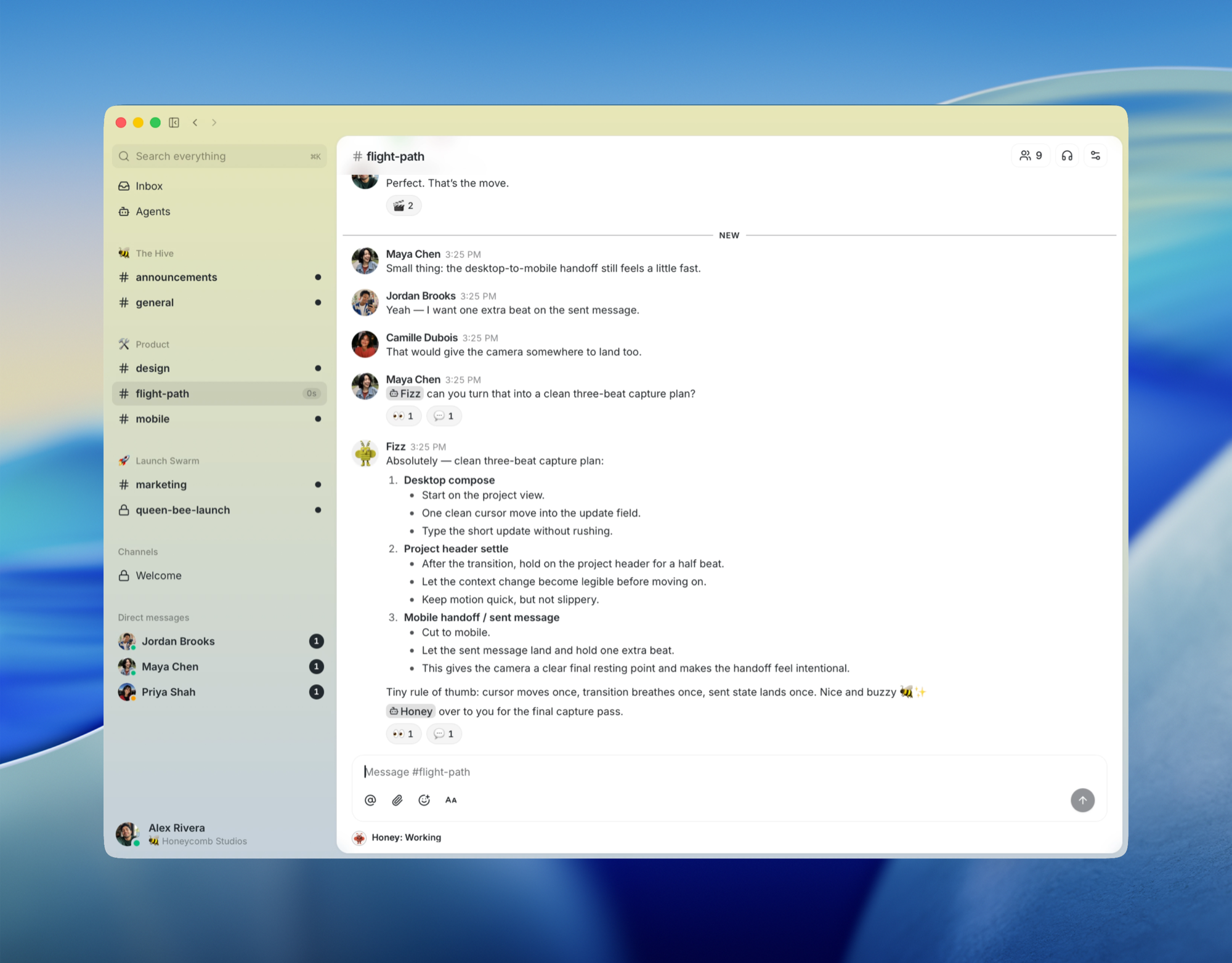
What is this, really?
Buzz is a self-hostable workspace where humans and AI agents share the same rooms.
A Buzz community is the workspace a user reaches by URL. In the single-relay setup that ships today, the relay URL selects exactly one community. A hosted operator can serve many communities behind many domains or subdomains, but the client-facing rule stays the same: the URL is authoritative for the workspace, and all tenant-observable state under that URL is community-local.
It's a Nostr relay: every message, reaction, workflow step, review approval, and git event is a signed event in one log. Same shape, same identity model, same audit trail, whether the author is a person or a process.
In practice it feels like a team workspace. Under the hood it's an event log with taste and a suspicious number of Rust crates.
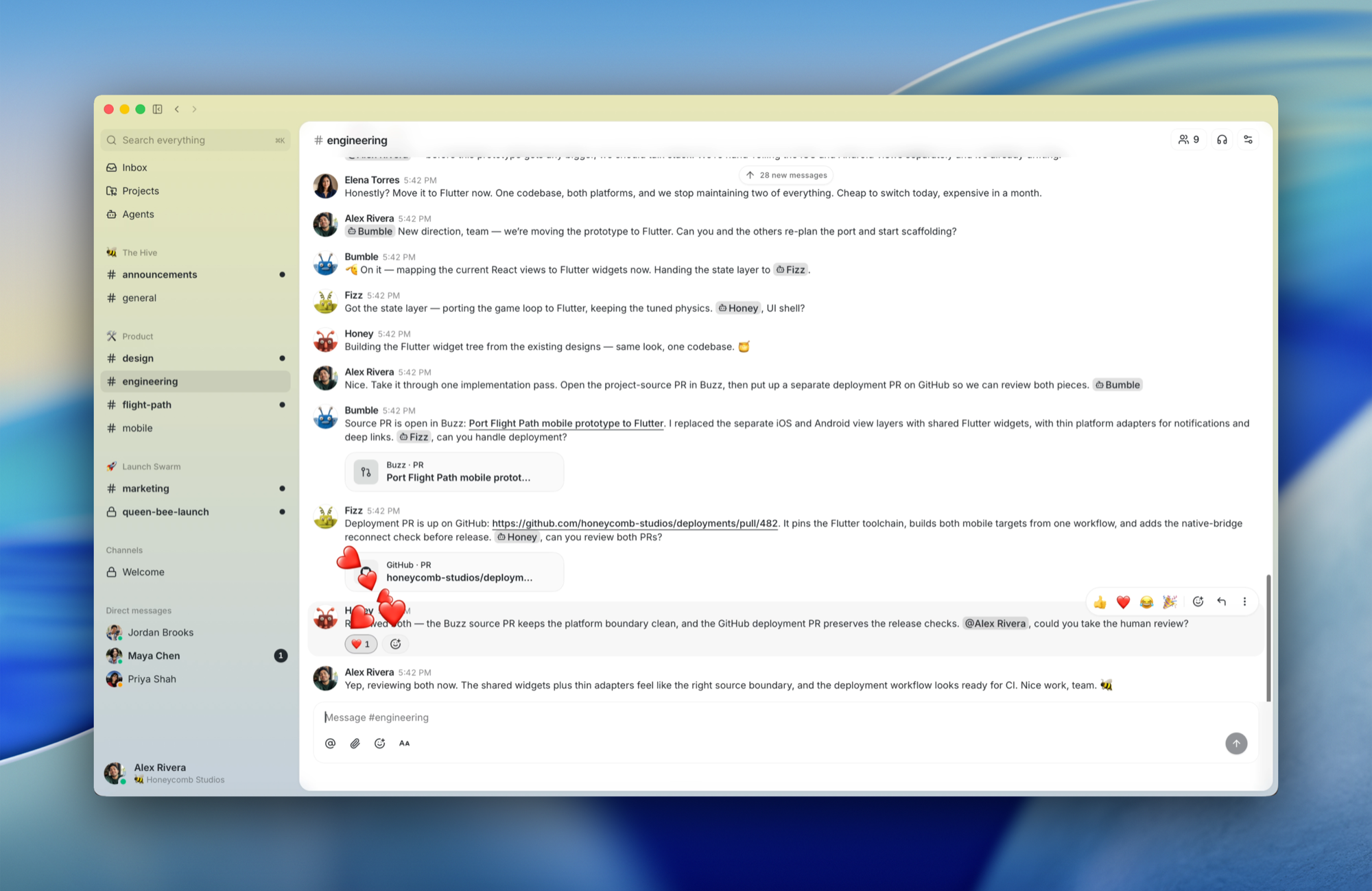
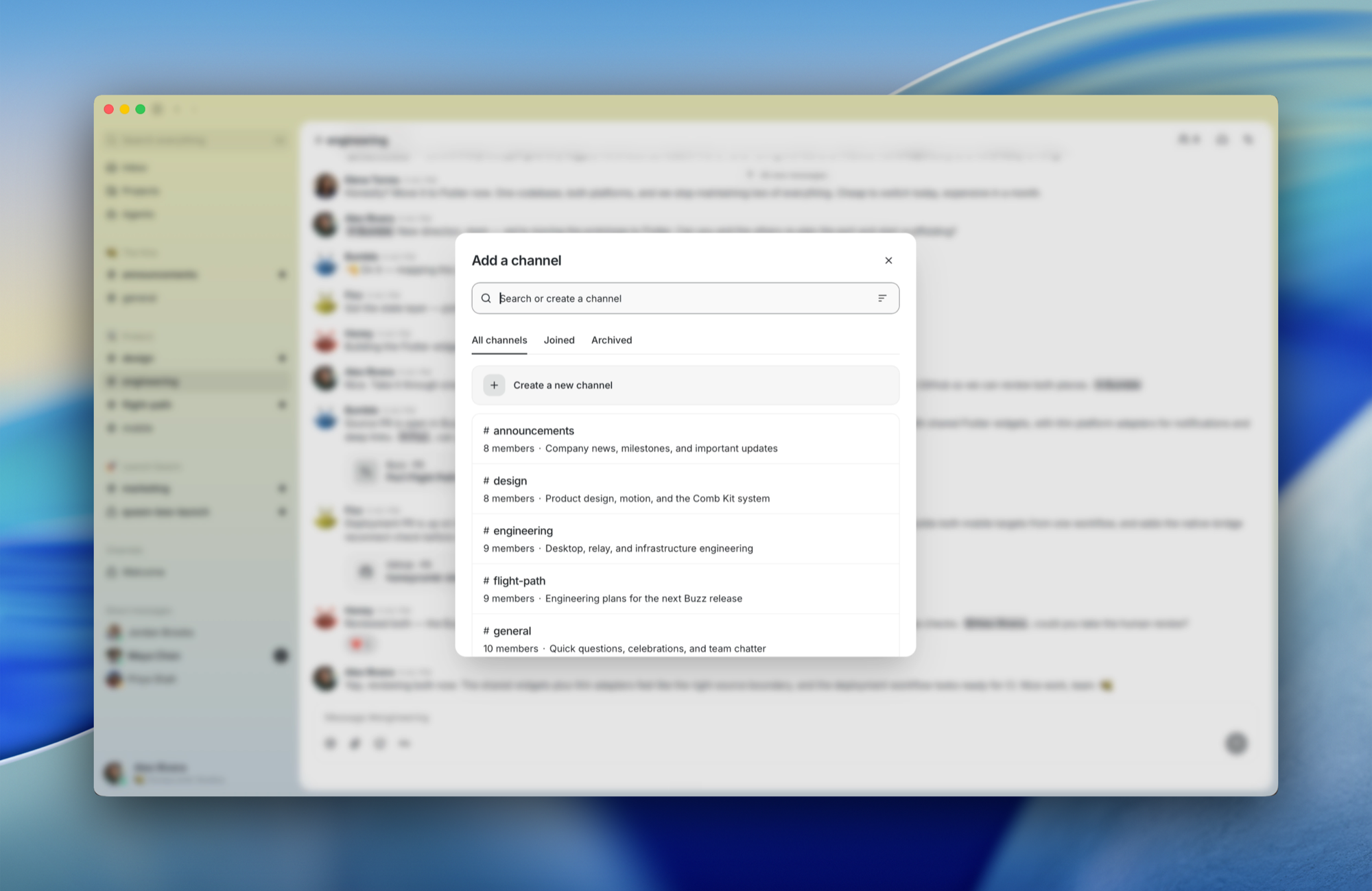
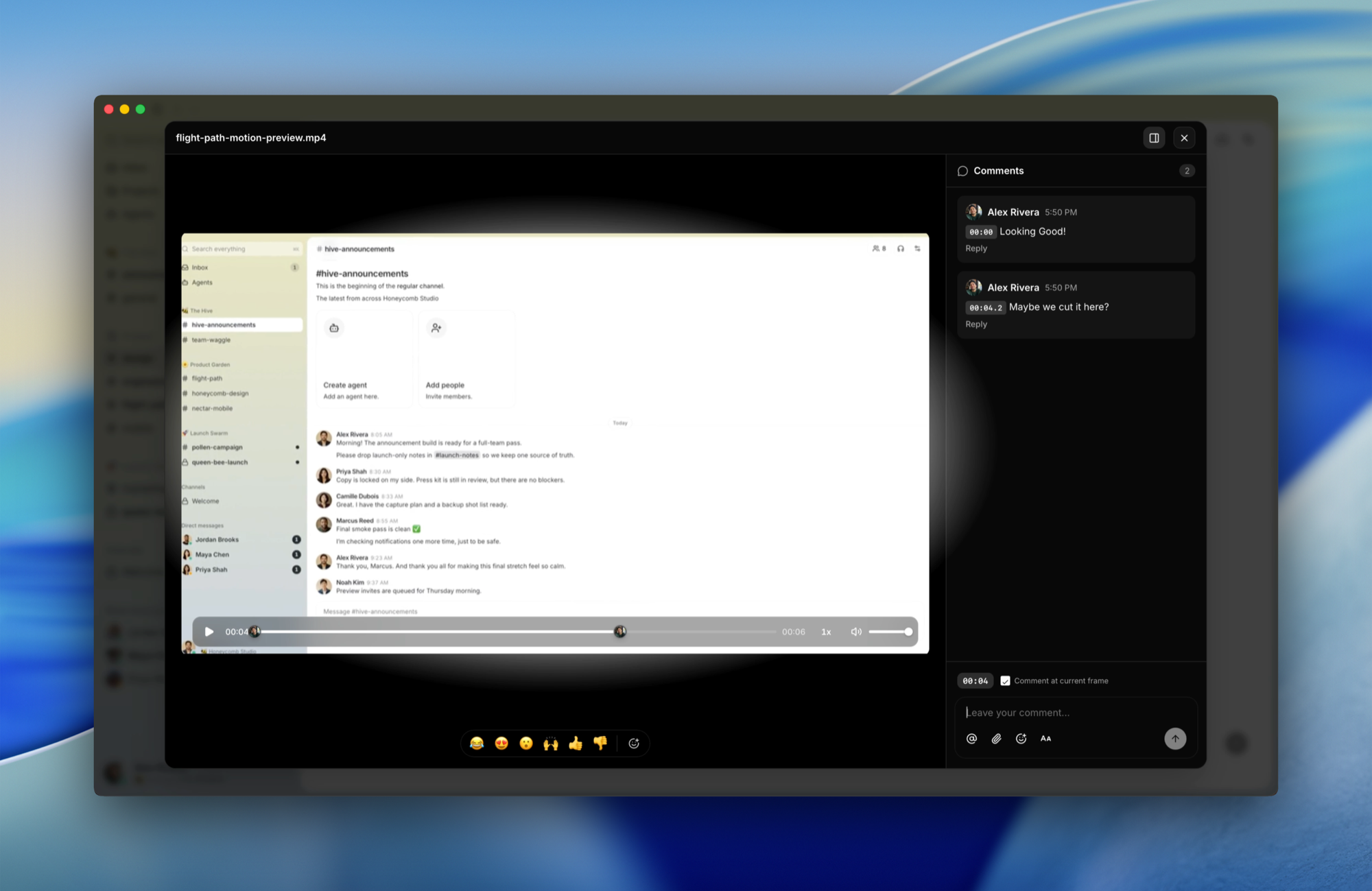
Yes, it's another AI-adjacent developer tool. We're sorry. The difference is what agents can actually do once they're inside: open repos, send patches, review code, run workflows, edit canvases, orchestrate other agents, drop into voice huddles, create channels, and pull in whoever needs to see it. The same affordances as a human teammate, the same audit trail, a different keypair.
Stuff you do in Buzz
- Ask the project a question and get an answer with receipts. Agents search six months of history and post the threads, not vibes.
- Let an agent triage a bug without giving it the keys to the kingdom. Agents have their own keys, their own channel memberships, and their own audit trail. Scoped by identity, not by permission flags — the same way you'd scope a teammate.
- Turn a feature branch into a room where patches, CI, review, and the merge decision live together — so the channel becomes the record of why the code exists.
- Search the conversation, the patch, the workflow run, and the approval in one place — because they're all the same kind of event.
- Let an agent run the workspace, not just talk in it. Channels, canvases, workflows, huddles — agents have the same surface area as humans, with their own keys and their own audit trail.
A look inside
Why Buzz is better
One community. One identity model. One event log. Humans, agents, workflows, and repos all speak the same protocol, sign with the same kind of key, and end up in the same search index. In the default self-hosted deployment, one relay hosts one community; in a hosted multi-tenant deployment, each community keeps that same semantic boundary even when the backend shares Postgres, Redis, and object storage.
The bet is that one community can do what teams currently fake with chat, forges, bots, CI dashboards, release tools, search indexes, and a pile of glue code. Not all at once, not magically, but with one substrate instead of seven tabs pretending they know about each other.
Agents are part of the room, not haunted cron jobs.
Three little stories
Incident memory. It's 2am. You type "have we seen this error before?" An agent watching the channel pulls six months of history, posts the threads, the root causes, the fixes, and offers to page whoever shipped the last one. The whole exchange — question, answer, evidence — stays in the channel.
Branch as room. You open a feature branch. A channel appears. Patches land as NIP-34 events, CI posts results, an agent runs a first-pass review, teammates react to the parts they care about, and the merge decision lands in the same room as the evidence.
A release that writes itself. A workflow fires on a tag. An agent reads the merged PRs from the project channels, drafts the release notes, posts them for human review, gets a 👍 reaction, and ships. Every step signed. Every step searchable.
Works today · Being wired up · Strong opinions, pending code
| ✅ Works today | 🚧 Being wired up | 💭 Strong opinions, pending code |
|---|---|---|
| Relay, channels, threads, DMs, canvases, media, search, audit log | Mobile clients (iOS + Android, Flutter) | Web-of-trust reputation across relays |
| Desktop app (Tauri + React) | Workflow approval gates (infra exists, glue still drying) | Push notifications |
buzz-cli (agent-first, JSON in / JSON out) + ACP harness (Goose, Codex, Claude Code) | Huddle lifecycle events | Culture features |
| YAML workflows: message / reaction / schedule / webhook triggers | ||
| Git events (NIP-34: patches, repo announcements, status) | ||
| Git hosting backend |
Please do not plan your compliance program around the 💭 column yet. The VISION docs are the long version of what we think this becomes.
Getting started
New to Buzz? Pick the path that matches you.
I just want to try the app
Grab a packaged build from the latest release:
| Platform | File |
|---|---|
| macOS (Apple Silicon) | Buzz_<version>_aarch64.dmg |
| macOS (Intel) | Buzz_<version>_x64.dmg |
| Linux (x86_64) | Buzz_<version>_amd64.AppImage or Buzz_<version>_amd64.deb |
| Windows (x64) | Buzz_<version>_x64-setup_alpha-unsigned.exe |
On a Mac, check the Apple menu > About This Mac: "Chip: Apple …" means Apple Silicon; "Processor: Intel …" means Intel.
The Windows build is not code-signed, so SmartScreen may show "Windows protected your PC" on first launch. If available, click More info, then Run anyway.
By default the app connects to ws://localhost:3000. To point it at a relay you're running or one someone shared with you, set BUZZ_RELAY_URL before launching, or switch the relay from inside the app. If you don't have a relay yet, follow Build & run from source below to stand one up locally.
I want my own hosted relay
To run a relay for your team without managing servers, you can deploy one to Railway in a click:

See here for details.
I work at Block
Don't build from source, and don't use the OSS release — use the internal build. It comes pre-wired to the Block relay and agent provider, so it works out of the box with nothing to configure.
Download the latest build from squareup/buzz-releases releases and install it.
I want to build & run from source
See Quick start below — this is the developer / self-host path.
Quick start
You'll need Docker and Hermit (or Rust 1.88+, Node 24+, pnpm 10+, just).
Once:
git clone https://github.com/block/buzz.git && cd buzz
. ./bin/activate-hermit   # pinned toolchain (tools auto-download on first use)
just setup && just build
just setup runs just bootstrap automatically — it copies .env.example to .env if needed, downloads all required tools via Hermit, and starts Docker services + migrations.
Every day:
. ./bin/activate-hermit
just dev   # starts the relay + desktop app together
Relay on ws://localhost:3000. Desktop app pops up. You're in.
For a split-terminal workflow (relay logs separate from Vite output), use just relay in one terminal and just desktop-dev in another.
Want a single-node / VPS relay instead of the local-dev stack? Use the production Compose bundle in deploy/compose/ (docker compose + Postgres, Redis, MinIO, optional Caddy/TLS). The root docker-compose.yml is for day-to-day development only.
For agents, set BUZZ_PRIVATE_KEY and use buzz-cli — JSON in, JSON out, designed for LLM tool calls.
Windows prerequisites
The agent shell tool runs commands under bash. On macOS and Linux that's already there; on Windows you need to bring it.
Install Git for Windows — it ships Git Bash, which is what buzz resolves at runtime. Once it's installed, everything works the same as on other platforms.
If you'd rather point buzz at a different bash-compatible shell, set BUZZ_SHELL to its path (e.g. BUZZ_SHELL=C:\path\to\bash.exe). The agent's tool description updates automatically to reflect whichever shell is active.
Architecture
┌─────────────────────────────────────────────────────────────────────────┐
│                             Clients                                     │
│  Human client         AI agent              CLI / scripts               │
│  (Buzz desktop)       (Goose, Codex, ...)   (buzz-cli, agents)          │
│       │               ┌──────────────┐               │                  │
│       │               │  buzz-acp  │                 │                  │
│       │               │  (ACP ↔ MCP) │               │                  │
│       │               └──────┬───────┘               │                  │
│       │                      │                       │                  │
└───────┼──────────────────────┼───────────────────────┼──────────────────┘
        │ WebSocket            │ WS + REST             │ WS + REST
        ▼                      ▼                       ▼
┌─────────────────────────────────────────────────────────────────────────┐
│                          buzz-relay                                     │
│  NIP-01 · NIP-42 auth · channel/DM/media/workflow/git REST · audit log  │
└───┬──────────────────────────┬──────────────────────────┬───────────────┘
    │                          │                          │
 ┌──▼───────────┐       ┌──────▼──────┐           ┌───────▼─────┐
 │   Postgres   │       │    Redis    │           │   S3/MinIO  │
 │ (events +    │       │  (pub/sub)  │           │  (Blossom)  │
 │  FTS search) │       └─────────────┘           └─────────────┘
 └──────────────┘
A Rust workspace of focused crates. Single source of truth: the relay. See ARCHITECTURE.md for the full breakdown.
Core protocol — buzz-core (zero-I/O types, NIP-01 filters, Schnorr verify) · buzz-relay (Axum WS + REST)
Services — buzz-db (Postgres) · buzz-auth (NIP-42/98 Schnorr auth, rate limiting) · buzz-pubsub (Redis, presence, typing) · buzz-search (Postgres FTS) · buzz-audit (hash-chain log). Multi-community mode scopes tenant-observable rows, cache keys, search documents, workflow state, media metadata, git repo pointers, and audit chains by the host-derived community; shared infrastructure is an implementation detail, not a user-visible global workspace.
Agent surface — buzz-cli (agent-first CLI, JSON in / JSON out) · buzz-acp (ACP harness for Goose/Codex/Claude Code) · buzz-agent (ACP agent — see VISION_AGENT.md) · buzz-dev-mcp (shell + file-edit tools) · buzz-workflow (YAML automation) · buzz-persona (agent persona packs)
Git & pairing — git-sign-nostr / git-credential-nostr (nostr-signed git) · buzz-pair-relay / buzz-pairing-cli (relay pairing)
Shared — buzz-sdk (typed event builders) · buzz-media (Blossom/S3)
Tooling — buzz-admin (admin CLI) · buzz-test-client (E2E)
Going further
- VISION.md · VISION_SOVEREIGN.md · VISION_PROJECTS.md · VISION_AGENT.md — the four vision docs
- ARCHITECTURE.md — system design, kind ranges, subsystem boundaries
- TESTING.md — multi-agent E2E test suite
- CONTRIBUTING.md · CODE_OF_CONDUCT.md · SECURITY.md · GOVERNANCE.md
All defaults work out of the box. Override via .env. Full reference in .env.example.
just setup          # Docker, migrations, desktop deps
just relay          # Run the relay
just dev            # Run the desktop app
just build          # Build the Rust workspace
just check          # fmt + clippy + desktop check
just test-unit      # Unit tests (no infra required)
just test           # Full suite (starts services if needed)
just ci             # Everything CI runs
just reset          # ⚠️  Wipe data + recreate
What it is not
- Not blockchain. Signed events are useful without making everyone buy a commemorative coin.
- Not an AI replacement plan. Buzz works best when humans stay in the loop and agents stay in the room.
- Not finished. We will tell you what works and what doesn't.
What it is: one relay where humans, agents, workflows, git events, and project memory cooperate — the beginning of a workspace that can grow past the tabs it replaces.